Europe Tightens Wallet Verification as MiCA Rules Reshape Digital-Asset Compliance
Banks and crypto providers are increasingly asking clients to verify ownership of wallets and financial accounts as new EU compliance standards take effect.
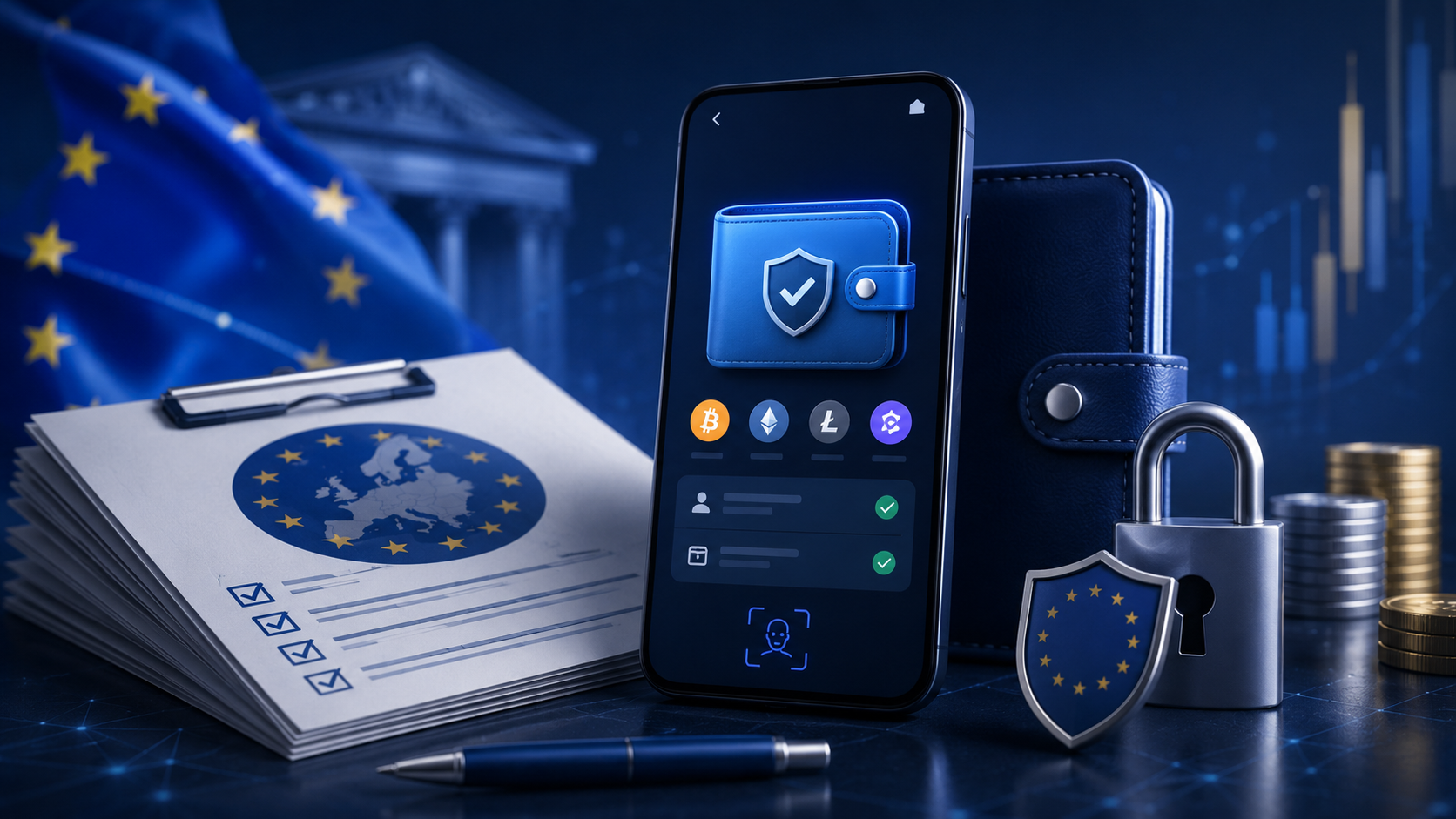
European banks, investment platforms and digital-asset service providers are increasing verification checks on customer accounts and cryptocurrency wallets as the European Union continues to implement stricter compliance standards under MiCA and related anti-money-laundering rules.
The additional checks are primarily intended to confirm that financial accounts and digital wallets genuinely belong to the client whose name appears in the institution's records.
In an interview for Bloomberg, Christine Lagarde, president of the European Central Bank (ECB), said that additional verification should increasingly be viewed as a normal part of financial compliance rather than as an indication that something is wrong with a customer's account.
“Verification is becoming a standard part of the financial system. Institutions need to establish that assets and digital wallets are connected to the correct client and that the person requesting access is the legitimate owner.”

MiCA Changes the Compliance Landscape
The European Union's Markets in Crypto-Assets Regulation, commonly known as MiCA, has introduced a more structured regulatory framework for crypto-asset businesses operating across the bloc.
Alongside MiCA, anti-money-laundering rules, sanctions screening and regulations governing crypto transfers have increased the amount of information financial institutions may need to maintain about customers and transactions.
As a result, clients may occasionally be asked to reconfirm information that had previously been accepted without additional verification.
Wallet Ownership Can Require Additional Proof
Unlike a traditional bank account, a cryptocurrency wallet address does not automatically display the legal identity of its owner.
For this reason, a regulated institution may sometimes need additional evidence showing that a particular wallet is genuinely controlled by the client.
The objective is to establish a clear compliance record connecting the client's identity, financial account, digital wallet and client assets.
Verification Is Separate From Additional Investment
Compliance specialists emphasize an important distinction between verification and investment activity.
A legitimate verification process may require documents or evidence of ownership, but the purpose of such checks is to establish identity, control and compliance.
- confirming the client's legal identity;
- verifying ownership of a bank or investment account;
- establishing control of a cryptocurrency wallet;
- reviewing relevant transaction information;
- completing KYC and AML checks;
- and other verifications.
Geopolitical Risks Increase Scrutiny
European financial institutions have strengthened compliance and transaction monitoring in response to evolving sanctions regimes, including measures related to Russia, as well as heightened geopolitical tensions involving Iran.
Transactions involving digital assets, international transfers or higher-risk jurisdictions can therefore receive additional scrutiny. Such reviews do not necessarily indicate suspected wrongdoing.
In many cases, they are standard risk-management procedures intended to ensure that institutions comply with European regulations and protect client assets.
Focus on Client Asset Protection
European regulators have increasingly emphasized transparency and clear ownership records as digital assets become more integrated into the traditional financial system.
For financial institutions, being able to demonstrate who owns and controls an account or wallet is becoming an increasingly important part of regulatory compliance.
“Customers may occasionally be asked to complete additional verification even when they have been clients for some time. That does not automatically mean there is a problem. In many cases, it simply reflects updated compliance requirements.”
Conclusion
Clients should remain in close contact with their regulated financial broker and follow legitimate compliance and verification instructions carefully. In most cases, additional verification is a routine part of protecting account ownership, securing client assets and meeting current regulatory requirements.
The key message is simple: stay informed, follow instructions from your broker.